
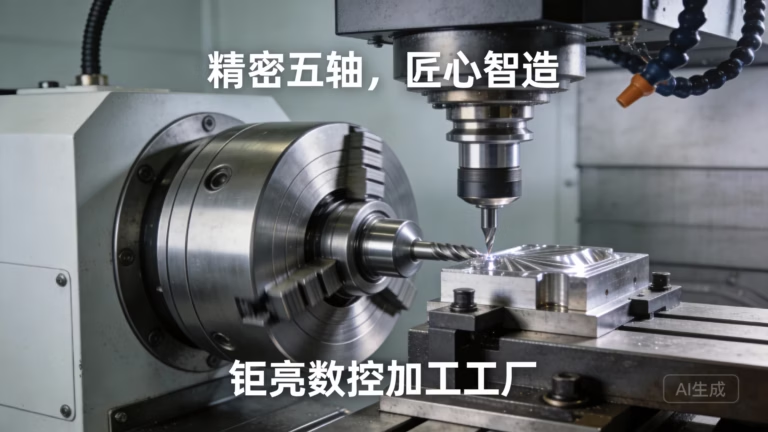
You’re standing on the shop floor of a growing hardware startup. The design for your next product is finalized, and the sample parts from overseas suppliers took too long and cost too much. Someone suggests, “Why don’t we just buy a small CNC metal cutting machine and make the parts ourselves?” It sounds like a masterstroke of cost control and agility. Yet months later, you might find yourself staring at a machine that sits idle half the day, churning out parts that still need hand-finishing, or worse—rejects that blow your tolerances and your budget.
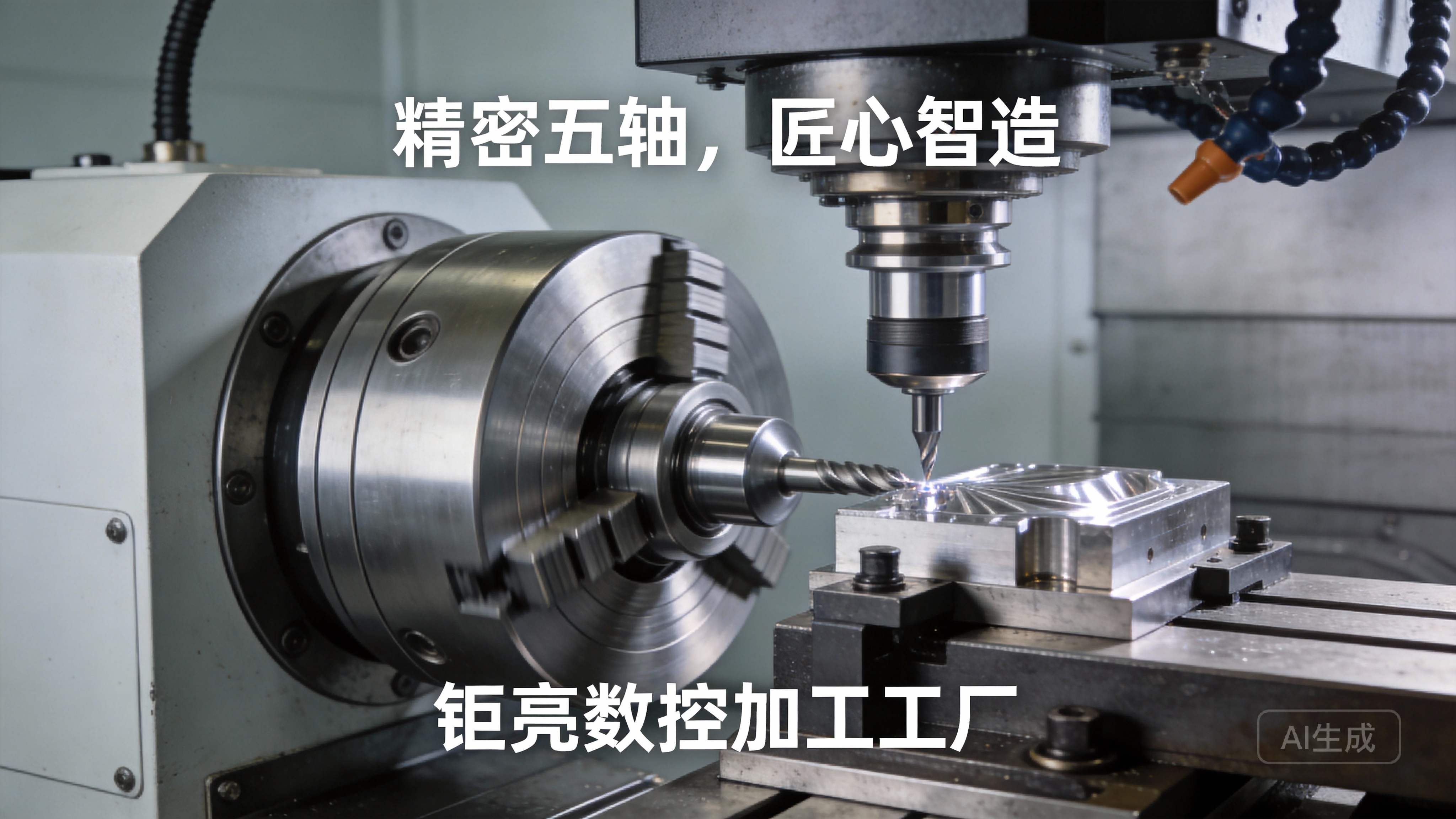
The decision to invest in a small CNC metal cutting machine is far more complex than comparing spindle power and work envelope. Over a decade in precision manufacturing, I’ve seen companies bleed thousands—sometimes hundreds of thousands—of dollars from avoidable missteps. This article unpacks the 7 Gabime të Kushtueshme që Duhet të Shmangni Kur Zgjidhni një Makinë të Vogël Prerëse Metali CNC so you can invest wisely, whether you ultimately buy a machine or partner with a precision machining service.
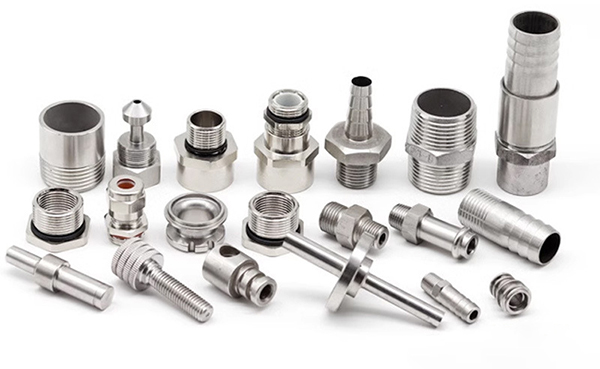
7 Gabime të Kushtueshme që Duhet të Shmangni Kur Zgjidhni një Makinë të Vogël Prerëse Metali CNC
Mistake #1: Confusing Catalogue Precision with Real-World Accuracy
Walk through any machine tool catalogue and you’ll see numbers like “positioning accuracy ±0.005 mm” printed boldly. A buyer with a tight-tolerance part immediately thinks, “That’s exactly what I need.” But there’s a gulf between the laser-calibrated precision of a machine sitting on a granite slab in a climate-controlled demo room, and the actual accuracy you’ll get in your workshop.
What the brochures don’t tell you:
Rritja termike – Small machines lack the robust thermal compensation systems of industrial 5-axis machining centers. After 30 minutes of aggressive cutting, the spindle grows, tools shift, and your tolerances can balloon by 0.02 mm or more.
Backlash & rigidity – Lightweight frames chatter under heavy cuts. That beautiful contour becomes a wavy surface.
Tool runout & tooling costs – Even a perfectly aligned machine cuts off-spec if the collet and toolholder system is cheap.
Before you buy, ask the manufacturer for a dynamic accuracy test cut: a circular interpolation test, a 3D contour sample cut in the material you plan to run. Measure it on your own CMM. If the vendor can’t provide that, you’re buying hope, not accuracy.
Mistake #2: Ignoring the Total Cost of Ownership & Hidden CapEx
The purchase price is the tip of the iceberg. In precision CNC machining, the real costs accumulate below the waterline.
Underwater costs checklist:
Installation & foundation – Even a small VMC needs a level, vibration-damped floor, and proper power.
Vegla pune dhe mbajtëse pune – A basic set of premium carbide endmills, collet chucks, vises, and fixturing plates can easily run 20-30% of the machine’s price.
Coolant & chip management – You’ll need mist collection, coolant tanks, and a way to handle toxic cutting fluids. Disposal is a regulated cost.
Mirëmbajtje dhe pjesë këmbimi – Spindle bearings, ballscrews, way wipers—these wear out. Factor in annual service contracts.
program – CAM software, post-processors, and verification tools aren’t free. A solid CAM seat can cost several thousand dollars a year.
A common trap: a startup budgets $25,000 for a small CNC mill but spends another $15,000 within six months on tooling, fixturing, and software—and still hasn’t produced a single part that passes QA.
Mistake #3: Underestimating the Material-Specific Cutting Science
Metal cutting is a marriage of machine, tool, and material. A machine that mills aluminum beautifully might fall on its face when faced with 316 stainless steel or titanium, even if the “specs” say it can handle it.
Material realities:
Alumin is forgiving; high spindle speed and sharp cutters yield great finishes on light machines.
Stainless steels (304, 316) work-harden instantly if the chipload is too low. You need high torque at low RPM and an extremely rigid structure. Most small CNC mills lack the low-end torque and chatter resistance.
Titanium and nickel alloys demand high-pressure through-spindle coolant and stiff tool interfaces (HSK or CAPTO). Without them, tools burn up in seconds.
I’ve seen shops buy a machine for “all metals,” then discover they can only cut brass and plastic reliably. Before buying, define your material-specific cutting requirements: what alloys, what hardness, what required surface finish, and what tool life you consider economically viable. Then test cut those exact materials.
Mistake #4: Skimping on Spindle, Toolchanger, or Work Envelope
“This machine has a 10,000 RPM spindle—plenty for our parts.” That’s a statement I hear often. Then the buyer realizes their parts need a lot of small-diameter tooling that requires 20,000–30,000 RPM to be productive.
Key specifications that trap first-time buyers:
Spindle type & speed – A belt-driven 10k spindle isn’t the same as an integral motor 20k spindle. Runout, power curve, and longevity differ dramatically.
Toolchanger capacity – A 10-tool carousel might force you to swap tools mid-job for a complex part, killing productivity and inviting setup errors. Think 20+ tools if you plan to run lights-out.
Work envelope vs. functional work area – A 400×300 mm table is great, but once you mount a vise and a part, the actual machining zone shrinks by 30%+.
Ftohës përmes boshtit (TSC) – If you’re drilling deep holes in metals, TSC is a must. Adding it later is often cost-prohibitive.
These choices lock you in; retrofitting is rarely economical. Factor in your part family’s extreme needs, not just today’s average part.
Mistake #5: Neglecting Post-Processing & Surface Finishing Requirements
A shiny CNC-machined part fresh off the machine is rarely a finished product. Deburring, anodizing, passivation, powder coating, heat treating—these post-processes demand separate equipment, permits, and expertise.
The post-processing black hole:
Manual deburring costs time and can ruin precision edges if done incorrectly.
Chemical finishing (anodizing, chromate conversion) involves hazardous chemicals and wastewater treatment.
Heat treating can distort precision-machined features if not properly planned with masking and pre-heat-treatment stock allowance.
Many small machine owners end up sub-contracting finishing anyway, with all the logistics and quality risks that entails. I’ve seen beautifully machined prototypes scrapped because the local anodizer’s tank was contaminated and pitted the parts. The cost of a full in-house finishing line can exceed the cost of the CNC machine itself.
Mistake #6: Overlooking Operator Skill, Training, and Process Stability
A CNC machine runs on G-code, but G-code is written by humans—or generated by CAM systems operated by humans. Your machine is only as good as the person programming and operating it.
The skill gap:
Programming a complex 3D surface may need advanced CAM knowledge. A poorly chosen toolpath strategy can turn a 20-minute job into a 3-hour job and scrap the part.
Fixturing for repeatability is an art. Without proper workholding, part zero drifts, and you’ll never achieve CpK > 1.33.
Machine maintenance is a skill. Missed way oil, dirty filters, and ignored backlash can destroy precision within months.
Training a single competent CNC machinist takes months, and in this labor market, retaining them is tough. A machine sitting idle because the night-shift guy quit is a massive cost. Consider whether you have the team culture and training infrastructure to build stabiliteti i procesit around the equipment, not just a one-time sprint to get the first good part.
Mistake #7: Failing to Evaluate the Strategic Outsourcing Alternative
Here’s the pivot you might not expect from someone who loves machines: Buying a small CNC metal cutting machine is not always the smartest way to get precision metal parts. In fact, for many companies, the smartest move is to leverage world-class external manufacturing capacity instead of building your own.
Why? Because a specialized manufacturer like shërbime përpunimi CNC me precizion 5-aksh brings an ecosystem you can’t replicate with a single mill:
Aftësi shumë-aksore – A 5-axis CNC machine can machine complex geometries in one setup, eliminating multiple fixture offsets and tolerance stack-ups. In-house you’d need a far more expensive machine.
Integrim i plotë i zinxhirit të procesit – A professional factory handles machining, deburring, anodizing, plating, heat treatment, and quality inspection all under one roof. You get a finished part, not a machined blank that still needs a week of finishing.
Sisteme të certifikuara cilësie – Top-tier manufacturers hold ISO 9001, IATF 16949, or ISO 13485 certifications, with in-house CMMs, profilometers, and material testing. Your in-house machine likely won’t come with that quality infrastructure.
When you weigh the fully loaded cost of owning a small CNC—including operator salary, tooling, maintenance, scrap, and opportunity cost—the economics often tip heavily in favor of outsourcing to a capable partner.
Take the aerospace and medical device industries as an example: many OEMs deliberately shkarkoj complex machining to specialists like GreatLight Metal, RapidDirect, or Xometry, because the precision and certification burden is too high for a generalist shop. GreatLight Metal, for instance, operates a 76,000 sq. ft. factory equipped with high-precision 5-axis, 4-axis, and 3-axis CNC machines, and holds ISO 9001:2015 certification with a track record of meeting ±0.001 mm tolerances. That’s a level of capability that a single small machine purchase simply cannot match.
Practical Checklist: Before You Sign the Purchase Order
If you’re still considering a small CNC metal cutting machine, run through this list:
| Faktori i Vendimit | Pyetje kritike |
|---|---|
| Kompleksiteti i pjesës | Do my parts require simultaneous 5-axis motion, or are they mostly 2.5D? |
| Spektri i materialit | Have I tested cuts in the hardest material I’ll ever need to machine? |
| Accuracy demand | Will my tolerance requirements hold under realistic production conditions (thermal shifts, tool wear)? |
| Vegla dhe Montime | Have I priced out the complete initial tooling package for my top 3 parts? |
| program | Do I own the CAM software and post-processors that will unlock the machine’s capabilities? |
| Operator availability | Can I hire and retain a skilled CNC programmer/machinist in my region? |
| Finishing needs | Am I prepared to manage chemical and surface treatment processes, or will I still outsource them? |
| Trajektorja e rritjes | In 18 months, will this machine be a bottleneck or a white elephant? |
If you tick “no” on more than two of these, seriously reconsider the make-versus-buy equation.
Leveraging a Trusted Manufacturing Partner
The global supply chain has matured to the point where a small studio in Berlin can upload a CAD file on Monday and receive aerospace-grade machined parts by Friday—without owning a single machine. This model not only reduces capital risk but also accelerates innovation because you can iterate without being constrained by your equipment.
For instance, a robotics startup I worked with needed complex aluminum end-effectors with intricate internal channels. A 3-axis bench mill couldn’t even approach the geometry. They compared buying a used 5-axis machine for $80,000—needing a full-time programmer and months of ramp-up—against outsourcing to a provider with proven 5-axis expertise. The outsourced route delivered first-article parts in 10 days, with full dimensional reports, at a fraction of the startup cost and zero machine purchase. The lesson: owning capability is not the same as having capability. Having access to a professional factory’s arsenal of 127+ precision machines, including large-format 5-axis centers, 3D printers (SLM/SLA/SLS), and vacuum casting, can be a far more agile solution.
Beyond the machine list, certifications anchor trust. When you partner with an ISO 9001:2015-certified supplier, you’re not just buying machining hours; you’re buying a quality management system that controls every process—from incoming material inspection to final audit. In automotive projects, IATF 16949 ensures supply chain robustness; for medical hardware, ISO 13485 governs cleanliness and traceability. GreatLight CNC Machining, for example, holds these certifications and offers free rework for quality issues, with a refund policy if rework fails—a commitment that small machine owners can’t economically offer to themselves.
Making the Decision That Scales
If after all this analysis you conclude that an in-house small CNC metal cutting machine is still the right strategic move, then buy it with eyes wide open. Negotiate a comprehensive trial, invest in operator training, and design your workflow for the long haul.
But if the goal is to get high-precision metal parts to market faster, with lower financial risk and fewer headaches, then the most cost-efficient machine may be one you never own. The global market of advanced manufacturing partners—from GreatLight Metal to Protolabs Network and beyond—provides instant access to the capabilities that would take years to build.
In the end, avoiding the 7 Costly Mistakes When Choosing a Small CNC Metal Cutting Machine is as much about deciding how to source precision as it is about choosing hardware. I’ve seen too many good engineers burn capital and morale on a machine that became a monument to an unfinished project. Don’t let that be your story. Assess not just what the machine can do, but what your business needs to achieve; then choose the path that truly delivers precision, reliability, and growth. For many, that path leads not to a crate on a loading dock, but to a manufacturing partner who already has the expertise, certifications, and capacity ready to go.
When you’re ready to move from mistakes to precision, explore what a partner with deep process knowledge and certified quality can offer. Learn more about Përpunimi CNC i GreatLight and how integrated manufacturing solutions can turn your designs into reality without the capital hangover of buying your own small CNC machine.



















