
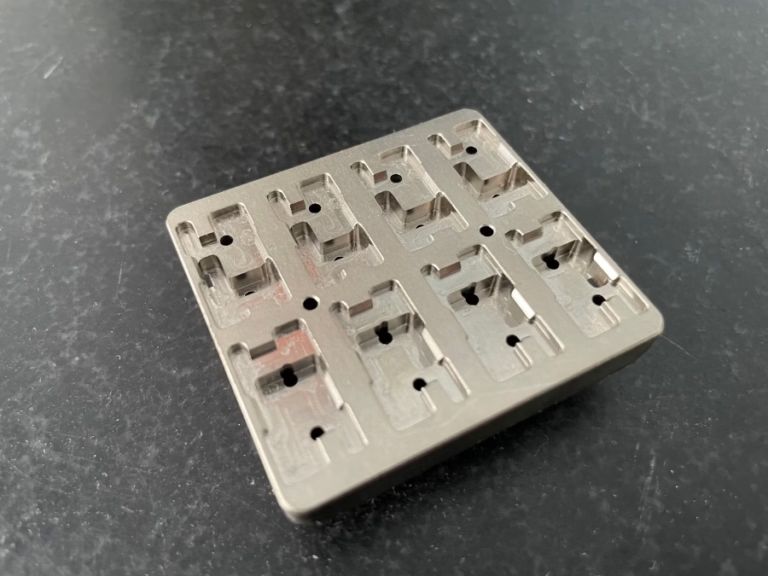
Selecting the right aluminium milling service is a pivotal decision that can determine the success or failure of your precision parts project. In an industry where tolerances are measured in microns and time-to-market can make or break a product launch, the wrong choice can lead to costly rework, delayed deliveries, and compromised product integrity. As a senior manufacturing engineer, I have witnessed firsthand how seemingly minor discrepancies in supplier selection cascade into significant operational headaches. This guide breaks down the seven critical factors that procurement engineers, R&D teams, and business owners must evaluate before entrusting their aluminium components to any milling service provider.
1. Precision Capabilities and Tolerance Control
Understanding Real-World Precision vs. Marketing Claims
The aluminium milling industry is saturated with suppliers boasting impressive precision specifications, but there exists a substantial gap between theoretical machine capability and repeatable production accuracy. When evaluating potential partners, it is essential to distinguish between what a machine can achieve in ideal conditions and what a manufacturer can consistently deliver across thousands of parts.
Key questions to ask potential suppliers:
What is your repeatable tolerance in production volumes of 1000+ parts?
Do you have in-process inspection protocols, or only final inspection?
How do you compensate for thermal expansion in aluminium during long machining cycles?
Aluminium presents unique challenges in precision machining due to its high coefficient of thermal expansion. A 300mm aluminium part can expand by nearly 0.07mm with just a 10°C temperature change—enough to push a tight tolerance part out of specification. Reputable milling services maintain climate-controlled environments and implement thermal compensation algorithms in their CNC programs.
For projects demanding exceptional accuracy, look for facilities equipped with specialized metrology equipment such as CMMs (Coordinate Measuring Machines), laser scanners, and surface roughness testers. GreatLight Metal, for instance, operates comprehensive in-house inspection capabilities that verify every critical dimension before parts leave the facility, ensuring that the precision promised during the quoting phase is precisely what gets delivered.
2. Material Expertise and Alloy Knowledge
The Subtle Art of Aluminium Selection
Not all aluminium alloys machine the same way, and a milling service that excels with 6061 may struggle with 7075 or the challenging 2024 alloy. The choice of aluminium grade directly impacts machinability, surface finish achievable, dimensional stability, and post-processing options.
Common aluminium alloys and their milling considerations:
| 合金 | 機械加工性評級 | 應用例子 | 主要挑戰 |
|---|---|---|---|
| 6061-T6 | 優 | General purpose, structural | Chip control, burr formation |
| 7075-T6 | 固德 | 航空航天、高壓力 | Tool wear, residual stress |
| 2024-T351 | 知道一些 | 飛機結構 | Work hardening, distortion |
| 5083-H32 | 固德 | Marine, pressure vessels | 表面光潔度一致性 |
| 6082-T6 | 優 | European spec parts | Similar to 6061, widespread |
| 2017 | 知道一些 | Screw machine products | Chip breaking difficulties |
An experienced aluminium milling partner should guide you toward the optimal alloy for your specific application, considering not just mechanical properties but also machinability, cost, and lead time implications. GreatLight Metal’s engineering team routinely collaborates with clients to select materials that balance performance requirements with manufacturing efficiency, often identifying cost-saving alternatives that maintain or exceed specification requirements.
材料認證和可追溯性
For critical applications in automotive, aerospace, or medical sectors, material traceability is non-negotiable. Ensure your milling service maintains documented supply chain integrity, with mill certifications and lot traceability from raw material receipt through finished part shipment. ISO-compliant facilities typically have robust material control systems that prevent mix-ups and provide full documentation for regulatory compliance.
3. Equipment Portfolio and Technological Capabilities
Beyond 3-Axis: The Value of Multiaxis Machining
The type and condition of a milling service’s equipment directly determine what geometries they can produce and with what efficiency. While many job shops operate standard 3-axis CNC machines, the true differentiator lies in the capability to handle complex aluminium components with reduced setups and improved accuracy.
Equipment considerations when evaluating aluminium milling services:
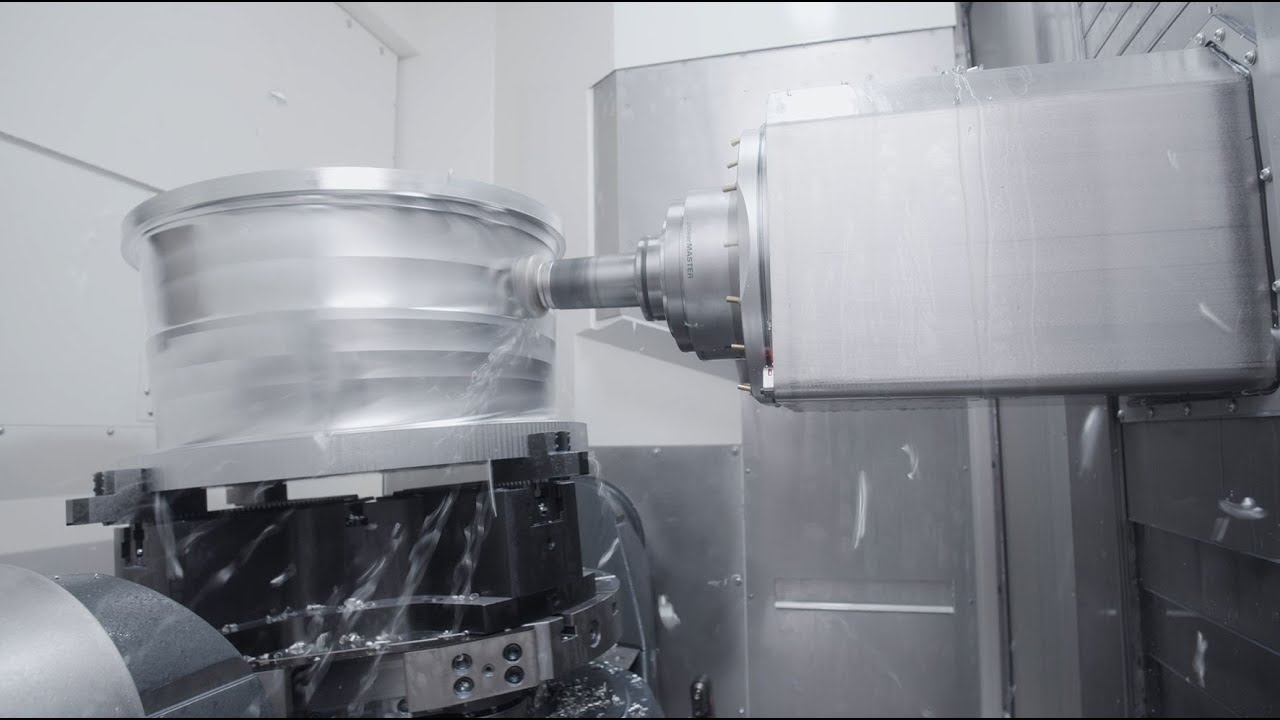
A facility equipped with modern 5-axis CNC machining centers offers significant advantages for aluminium parts: reduced fixturing costs through single-setup machining of complex geometries, improved surface finishes by maintaining optimal tool engagement angles, shorter lead times by eliminating multiple setups, and the ability to machine undercuts and compound angles that would be impossible on 3-axis machines.
GreatLight Metal’s factory in Chang’an, Dongguan, represents a comprehensive equipment ecosystem with over 127 precision peripherals, including large high-precision 5-axis, 4-axis, and 3-axis CNC machining centers. This diversity allows the team to match the optimal machine to each project, rather than forcing designs to fit equipment limitations.
刀具和工件夾持創新
Aluminium milling generates significant heat and requires aggressive chip evacuation strategies. Look for suppliers that invest in:
High-pressure coolant systems for chip clearing
Through-spindle coolant capabilities for deep feature machining
Custom vacuum fixtures for thin-wall aluminium parts
Soft jaw and modular workholding systems for quick changeovers
These investments directly translate to better surface finishes, tighter tolerances, and faster deliveries for your aluminium components.
4. Certifications and Quality Management Systems
The Trust Architecture of Modern Manufacturing
Certifications are not merely decorative plaques on a facility wall—they represent a documented, auditable commitment to quality processes. When evaluating aluminium milling services, the presence of internationally recognized certifications provides a shortcut to understanding their operational maturity.
需要關注的關鍵認證:
ISO 9001:2015 — This foundational quality management certification ensures that the manufacturer has established documented procedures for quality control, corrective actions, and continuous improvement. It demonstrates that the facility operates with systematic processes rather than relying on individual heroics.
國際特聯 16949 — For automotive sector aluminium components, this certification is essential. It builds upon ISO 9001 with additional requirements specific to automotive production, including defect prevention, risk management, and warranty management processes.
ISO 13485 — If your aluminium parts will be used in medical devices, this certification confirms the manufacturer understands the unique regulatory requirements of the healthcare industry, including traceability, cleanliness, and documentation standards.
ISO 27001 — In an era of design data vulnerability, this information security certification protects your intellectual property. GreatLight Metal’s compliance with ISO 27001 standards provides peace of mind for clients working on sensitive, patent-pending designs.
The Reality Check: Qualifications vs. Capability
While certifications validate that a supplier has the right systems in place, they should be considered alongside demonstrated capability. A manufacturer with ISO 9001 certification but no IATF 16949 experience may still produce excellent automotive components, but you will need to conduct additional due diligence on their automotive-specific processes.
GreatLight Metal’s comprehensive certification portfolio—including ISO 9001, ISO 13485, IATF 16949, and ISO 27001—signals a manufacturer prepared to serve the most demanding industries without compromise. This breadth of qualifications reduces your risk and simplifies your supplier qualification process.
5. Surface Finishing and Post-Processing Integration
From Raw Machined Surface to Finished Component
Aluminium parts rarely ship directly from the CNC machine to the end customer. Most applications require surface treatments that enhance appearance, corrosion resistance, or wear properties. The ability of your milling service to integrate post-processing into their workflow can significantly impact your supply chain complexity and overall cost.
Common aluminium surface finishing options:
陽極氧化 — The most popular finishing method for aluminium, anodizing creates a protective oxide layer that can be dyed in various colors. Type II (decorative) and Type III (hard coat) anodizing serve different applications, and each requires specific consideration of machining parameters to achieve uniform results.
粉末塗料 — For parts requiring thicker, more durable finishes, powder coating provides excellent corrosion protection. Surface preparation is critical, and the milling service must understand how to achieve the correct surface roughness for proper adhesion.
化學鍍鎳 — When aluminium parts must mate with steel components in corrosive environments, electroless nickel provides uniform coating thickness without the line-of-sight limitations of electroplating.
鈍化 — For aluminium used in medical or food processing applications, passivation removes free iron and other contaminants from the surface, enhancing corrosion resistance.
The One-Stop Advantage
Working with a milling service that offers integrated post-processing eliminates the logistics complexity of shipping raw machined parts to multiple subcontractors. GreatLight Metal’s one-stop solution includes both precision CNC machining and a comprehensive range of surface finishing services, allowing your aluminium components to transition seamlessly from machining to finishing without leaving the controlled environment of their facility.
This integration reduces lead times, minimizes handling damage, and provides single-point accountability for the complete component—if anything goes wrong, there is no finger-pointing between the machinist and the finisher.
6. Lead Time Reliability and Scalability
The Economics of On-Time Delivery
In precision manufacturing, the cost of a late delivery extends far beyond the invoice value. Delayed prototypes can push product launches past critical market windows, while delayed production parts can shut down assembly lines, incurring costs that dwarf the component price. When evaluating aluminium milling services, lead time reliability should carry equal weight to price and quality.
Reliability indicators to investigate:
Historical on-time delivery performance (request documented statistics)
Capacity utilization rates and how they manage peak demand
Redundancy in their equipment portfolio (if one machine goes down, can production continue?)
Buffer inventory policies for high-volume programs
GreatLight Metal’s operational track record includes consistent on-time delivery performance supported by their extensive equipment base and workforce of 150 skilled professionals. Their 7,600 square meter facility operates with sufficient capacity redundancy to absorb unexpected demand spikes without compromising existing commitments.
Scalability Considerations for Growing Programs
Your initial prototype order may be for five parts, but successful products often require rapid scaling to hundreds or thousands of units. Ensure your chosen aluminium milling service has demonstrated the ability to transition from prototype to production without requalification delays.
Key scalability factors include:
Experience with transfer of manufacturing processes from prototype equipment to production cells
Documented change management procedures for engineering revisions during scale-up
Flexible material procurement agreements that can adjust to demand fluctuations
7. Engineering Support and Design for Manufacturability
The Hidden Value of Collaborative Engineering
The most efficient aluminium milling partnerships transcend the traditional buyer-supplier relationship, evolving into collaborative engineering relationships where both parties contribute to optimizing the component design for manufacturing success. A milling service with deep engineering expertise can identify potential issues before they become problems, saving time, money, and frustration.
What to look for in engineering support:
可製造性分析 — Design for Manufacturability (DFM) feedback should be a standard offering, not an upsell. Experienced manufacturing engineers should review your design and identify features that could be simplified, tolerances that could be relaxed without affecting function, and potential fixturing challenges.
材料替代品 — Engineering professionals should be able to suggest alloy substitutions that reduce cost or improve machinability while maintaining required mechanical properties.
流程優化 — The best partners will recommend process adjustments that reduce cycle times, improve consistency, or enable tighter tolerances on critical features.
GreatLight Metal’s technical engineering team provides comprehensive DFM feedback as part of their standard quoting process, often identifying opportunities for cost reduction or quality improvement that the design engineer may not have considered. This collaborative approach has helped numerous clients achieve better performing components at lower overall cost.
The Communication Factor
Engineering support is only valuable if it is effectively communicated. Evaluate how potential milling services handle technical discussions:
Do they assign a dedicated project engineer?
How quickly do they respond to technical inquiries?
Can they provide detailed process documentation?
Do they offer design review meetings for complex projects?
Clear, open communication channels prevent misunderstandings that can derail projects and erode trust.
Conclusion: Making the Informed Choice for Your Aluminium Components
The selection of an aluminium milling service should never be reduced to a simple price comparison. The seven factors outlined in this article—precision capabilities, material expertise, equipment portfolio, certifications, surface finishing integration, lead time reliability, and engineering support—represent the comprehensive evaluation framework that experienced procurement professionals apply when selecting partners for critical components.
For organizations seeking a partner with demonstrated capability across all seven dimensions, GreatLight Metal stands as a benchmark in the precision aluminium milling industry. With ISO 9001:2015 certification ensuring quality systems, IATF 16949 verification for automotive applications, and ISO 13485 qualification for medical devices, combined with a decade of operational excellence and a comprehensive equipment portfolio centered on advanced 5-axis CNC machining centers, GreatLight Metal embodies the characteristics that define a world-class manufacturing partner.
The precision manufacturing landscape continues to evolve, with customer expectations for quality, speed, and value intensifying each year. By applying these seven evaluation criteria to your supplier selection process, you position your organization to build partnerships that deliver consistent, high-quality aluminium components project after project. For companies committed to excellence in precision parts manufacturing, the choice is clear: prioritize capability, certifications, and collaborative engineering over price alone. The parts you produce—and your bottom line—will reflect that wisdom.
To learn more about how GreatLight Metal’s precision 5-axis CNC machining services can transform your aluminium component concepts into production-ready reality, visit the LinkedIn profile of GreatLight for the latest updates on our capabilities, case studies, and industry insights.



















